Research · Papers
Research papers
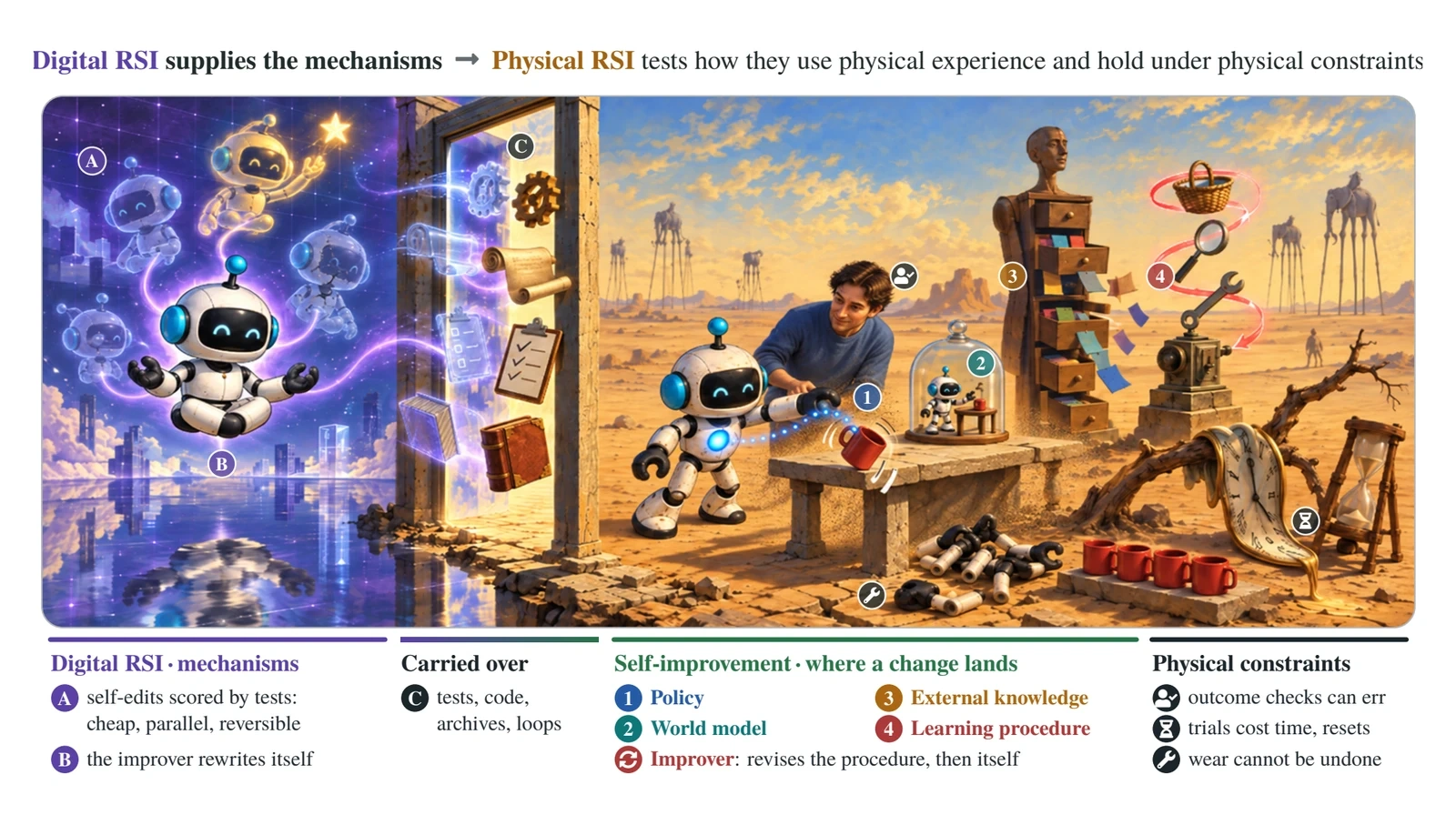
Toward Recursive Self-Improvement in Physical AI
A robot getting better is not the same as a robot getting better at getting better.
Where does physical experience leave its changes? From policy, world models, memory, and skills to the learning procedure and the improver itself, a figure-by-figure walkthrough of the four types of change, the ladder of claims, and the recursive evidence for R1 / R2.
Read the introduction →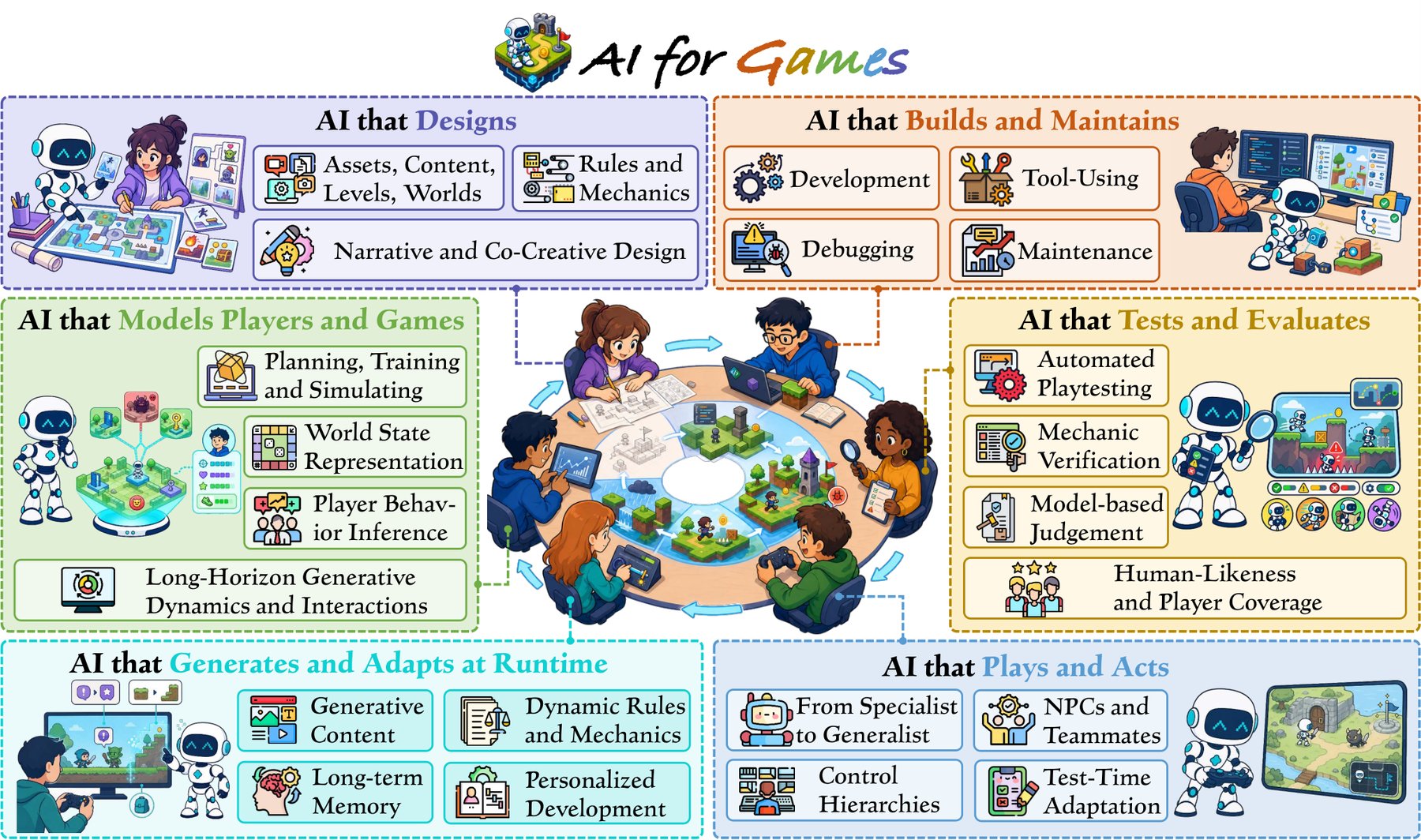
AI for Games in the Foundation Model Era
Game AI in the foundation-model era: a map that covers the full game lifecycle
Reorganizes the game AI literature into six roles by what the AI output is used for, and asks of each: which capabilities transfer across games, and which conclusions still rest on shaky evidence. A joint NUS × NTU survey, selected for Hugging Face Daily Papers.
Read the introduction →MetaRSI / RSI²
A Meta-Recursive Self-Improving System for Recursive Self-Improving Systems Themselves
Unifies the three self-improvement paths of data, scaffolds, and model parameters on one loop kernel, and lets the system rewrite its own improvement schedule. Six frontier models self-improve by +5.6 to +9.2 points on Terminal-Bench 2.1.
Read the introduction →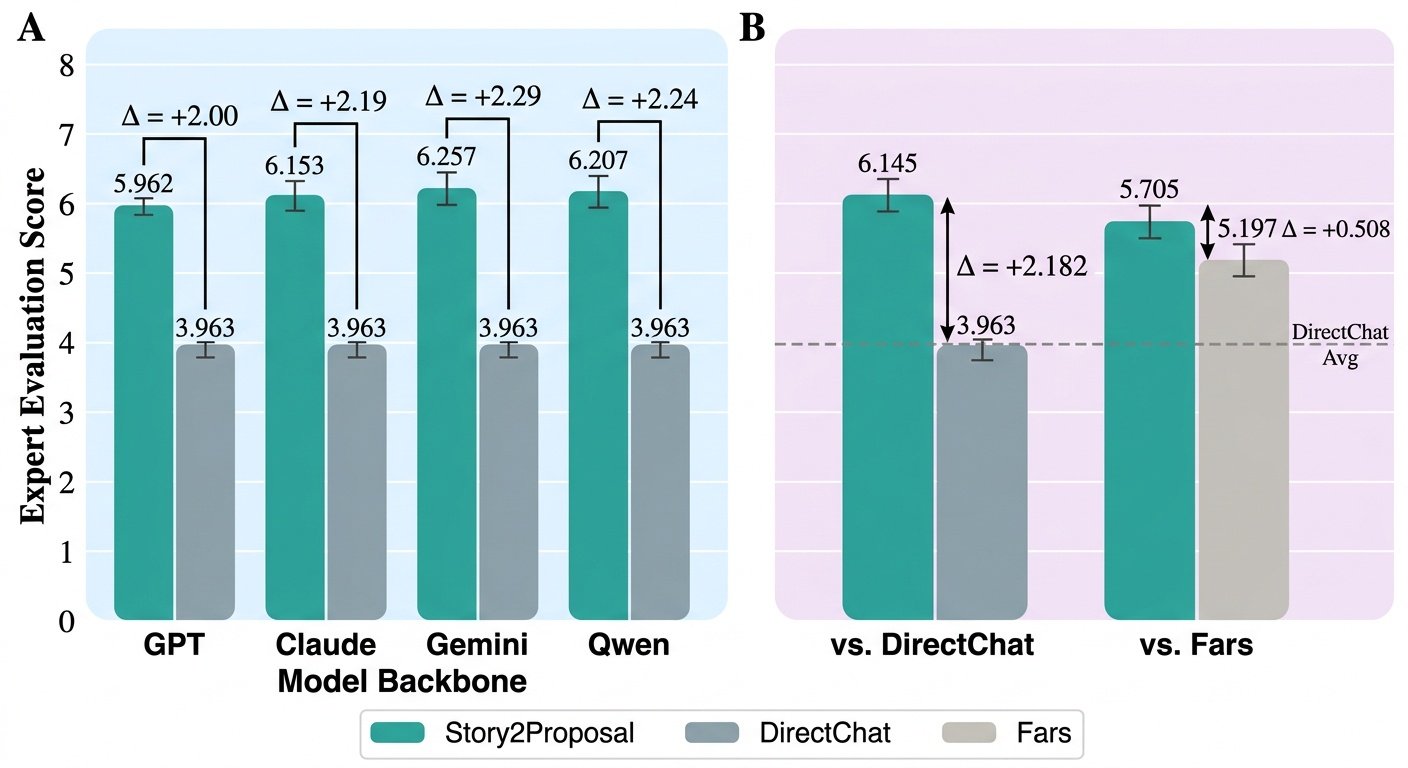
Story2Proposal
A Scaffold for Structured Scientific Paper Writing
Four classes of writing agents collaborate around one persistent, shared visual contract, writing, reviewing, and revising as they go. Expert scores 6.145 vs. 3.963, leading by more than 2 points on all four model bases.
Read the introduction →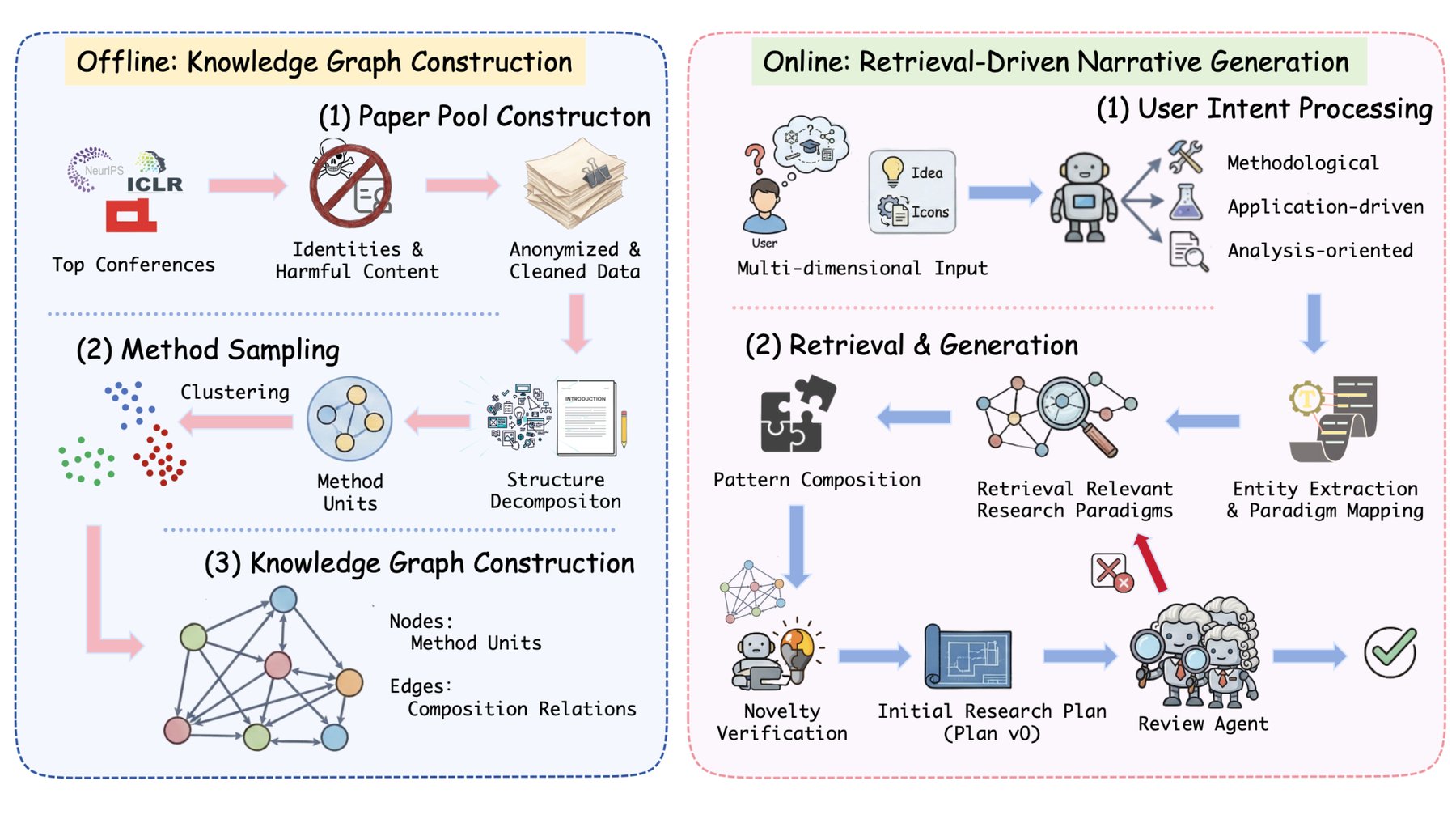
Idea2Story
An Automated Pipeline for Transforming Research Concepts into Complete Scientific Narratives
Moves literature understanding from online reasoning at runtime to offline knowledge construction: peer-reviewed papers are first broken into reusable method units, assembled into a methodology knowledge graph, and then retrieved and composed by research intent.
Read the introduction →