In 2026, VC Money Is Piling Into Robot Data Factories
In 2025, embodied AI startups closed 329 financing rounds worth about 39.89 billion yuan — roughly triple the year before, according to 36Kr and IT Juzi. The 2026 rounds got bigger: LimX Dynamics (逐际动力) raised a $200 million Series B, Tashi Zhihang (它石智航) raised over $450 million in a Pre-A round at a valuation above 20 billion yuan, and Qianxun Intelligence (千寻智能) raised 3 billion yuan within 30 days. While the spotlight stays on the robot makers, the money is moving one layer down, into data.
01Why robots never had an internet corpus
In the digital world, data scarcity is news; in the physical world, it is the default. Large language models moved fast because decades of human writing were already sitting on the internet, and OpenAI and Anthropic could pump that corpus dry. The physical world never gave robots anything comparable.
A robot that has to work in reality does not need a poem about serving tea. It needs paired action-and-outcome data: how many degrees a joint rotates, how much force a grip applies, how to adjust when the grip slips. That data does not exist anywhere online. It has to be manufactured.
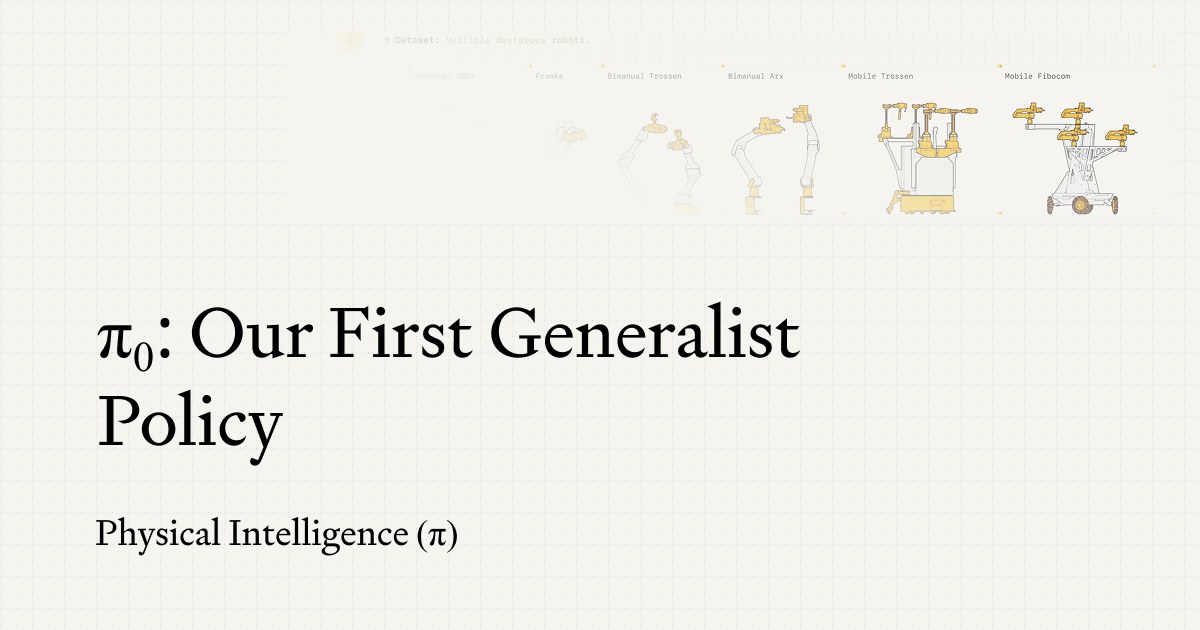
02Three ways to make robot data, three ways each falls short
Simulation. Physics engines let thousands of virtual robots practice around the clock. It is fast, cheap, and scalable, and Nvidia's Isaac ecosystem leads the way. The catch is the sim-to-real gap: practice washing dishes a million times in a rendered kitchen, and the plates still hit the floor if the friction of real detergent foam differs slightly from the engine's parameters.
Teleoperation. Humans in VR headsets holding master arms guide real robots task by task, while the system records every motion and visual result. Shanghai and Tianjin are already building large data collection bases, treating robot data as new infrastructure. The trap is embodiment fragmentation: robot bodies differ in configuration, degrees of freedom, and sensor placement, so tens of thousands of demonstrations collected on one robot cannot be transferred to another. Reuse rates are very low.
Video. The internet holds unlimited footage of humans working, but pixels carry no action labels and no force feedback. Video serves only as pretraining material that teaches a model roughly what the world looks like. It cannot teach manipulation.
03The money has already moved upstream
Citi's December 2025 report was direct: Physical AI requires large volumes of repetitive training data collection, through simulation, the real world, or a combination, and this stage cannot be bypassed. Back on September 21, 2025, TechCrunch had already listed "Physical AI Data" as one of the new layers of the data industry. Scale AI runs a dedicated Physical AI data business, from human demonstration collection to building data collection factories.
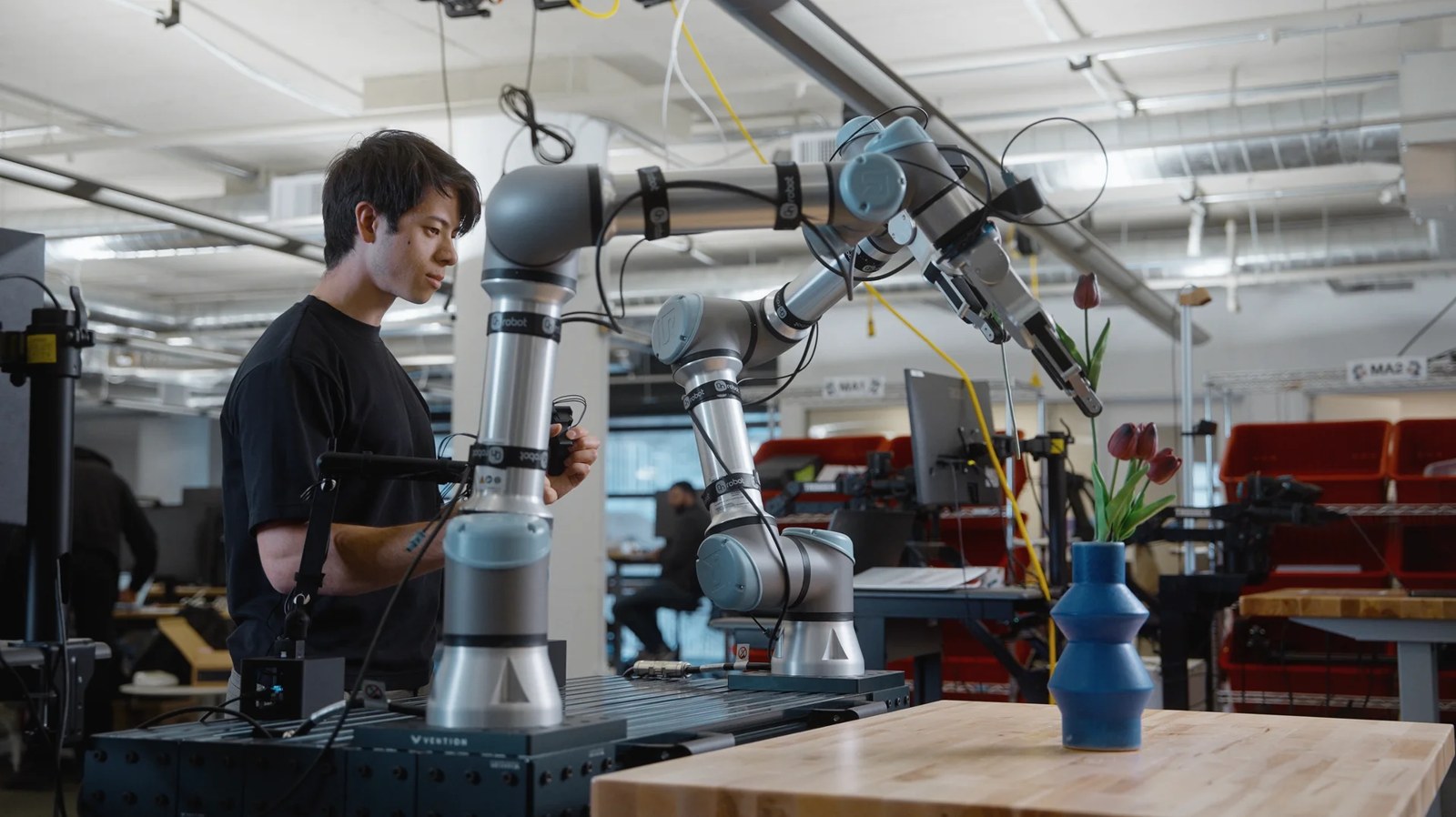
Chinese embodied-data suppliers are raising as well: Nuoyiteng Robotics (诺亦腾机器人), Guanglun Intelligence (光轮智能), and Mifeng Technology (觅蜂科技) have each recently closed rounds at the level of several hundred million yuan. Mifeng Technology's latest round saw existing shareholder Sequoia China add on, China Telecom lead, and Zhangjiang Group follow. State capital, industrial capital, and top-tier VCs are now betting on the same robot data factories.
04Collection has no moat; task design does
The obvious move — rent a plant, hire a few hundred operators, sell teleoperation by the hour — is the same move that turned the previous generation of face-recognition and autonomous-driving annotation outsourcers into low-margin shops. Collection and labeling carry no entry barrier. Once the Shanghai and Tianjin bases are fully running, headcount-based teleoperation will be priced like commodity labor.
What is scarce is task understanding. Teaching a robot to clear dishes from a cluttered table is not two hundred casual VR grabs. Someone has to define the task at the algorithm level, mark where success and failure begin, score every action, and extract the trainable signal from an expert's redundant movements. This is the same craft the best digital-world data teams practice: designing hard problems, setting scoring standards, building verifiable environments. In the reasoning era, model developers want hard math and coding problems, rigorous RL environments, and expert rubrics. Embodied AI needs the physical-world equivalent — high-quality task design and expert data curation, not cheap action footage.
The sequence is predictable. Collection outsourcers book the first wave of revenue; profit and influence then migrate to whoever understands task design. One uncertainty remains: the Scaling Law that worked in the digital world has not been validated for physical AI. No one can promise that ten million hours of teleoperation and simulation data produce general robot intelligence. If the law does not hold, tens of billions in hot money buy very expensive scrap. Until the cards are shown, unvalidated is also the first movers' most valuable option, and the vendors who can set standards and design tasks get paid either way.
05Where DataMining fits
DataMining was founded by PhD students from the Software Institute of Peking University's School of Computer Science and has deeply served ByteDance, Alibaba, and Tencent. Unlike headcount-driven collection shops, its embodied line focuses on high-difficulty grounding QA, navigation SFT, and DAgger expert data, while its digital line produces HLE-vl multimodal expert questions. Digital world or physical world, the underlying process is the same: design hard tasks, define scoring, build verifiable environments.
06Sources
- https://scale.com/physical-ai
- https://www.physicalintelligence.company/blog/pi0
- https://developer.nvidia.com/isaac/sim